Creative Math Activities for Every Grade Level
Creative Math Activities for Every Grade Level
Math engagement rarely comes from worksheets alone.
Across elementary, middle school, and high school classrooms, the most effective teachers combine strong instruction with creative math activities that encourage students to think, collaborate, and apply what they’ve learned.
The challenge many teachers face is finding activities that are both:
• engaging for students
• rigorous enough to support real learning
The good news is that creative math activities exist for every grade level, from elementary classrooms building foundational skills to high school courses applying algebra and real-world modeling.
Below are some of the most effective approaches teachers use to bring energy, curiosity, and purpose into their math classrooms.
Why Creative Math Activities Matter
Today’s students are surrounded by technology, interactive media, and instant feedback.
Traditional worksheets alone often struggle to compete with that environment.
Creative math activities don’t remove rigor — they increase engagement while strengthening understanding.
The most effective creative math activities usually include:
• mystery or problem-solving elements
• collaboration with peers
• self-checking structures
• real-world scenarios
• higher-order thinking
When these elements come together, students are far more likely to stay focused and persist through challenging problems.
Fun Math Activities That Keep Students Thinking
Teachers often search for fun math activities when they want something that breaks up routine practice while still reinforcing important skills.
The key is finding activities that feel fun for students without sacrificing meaningful learning.
Many of the most effective fun math activities combine:
• mystery
• collaboration
• competition
• real-world problem solving
Here are several classroom-tested formats that consistently keep students engaged.
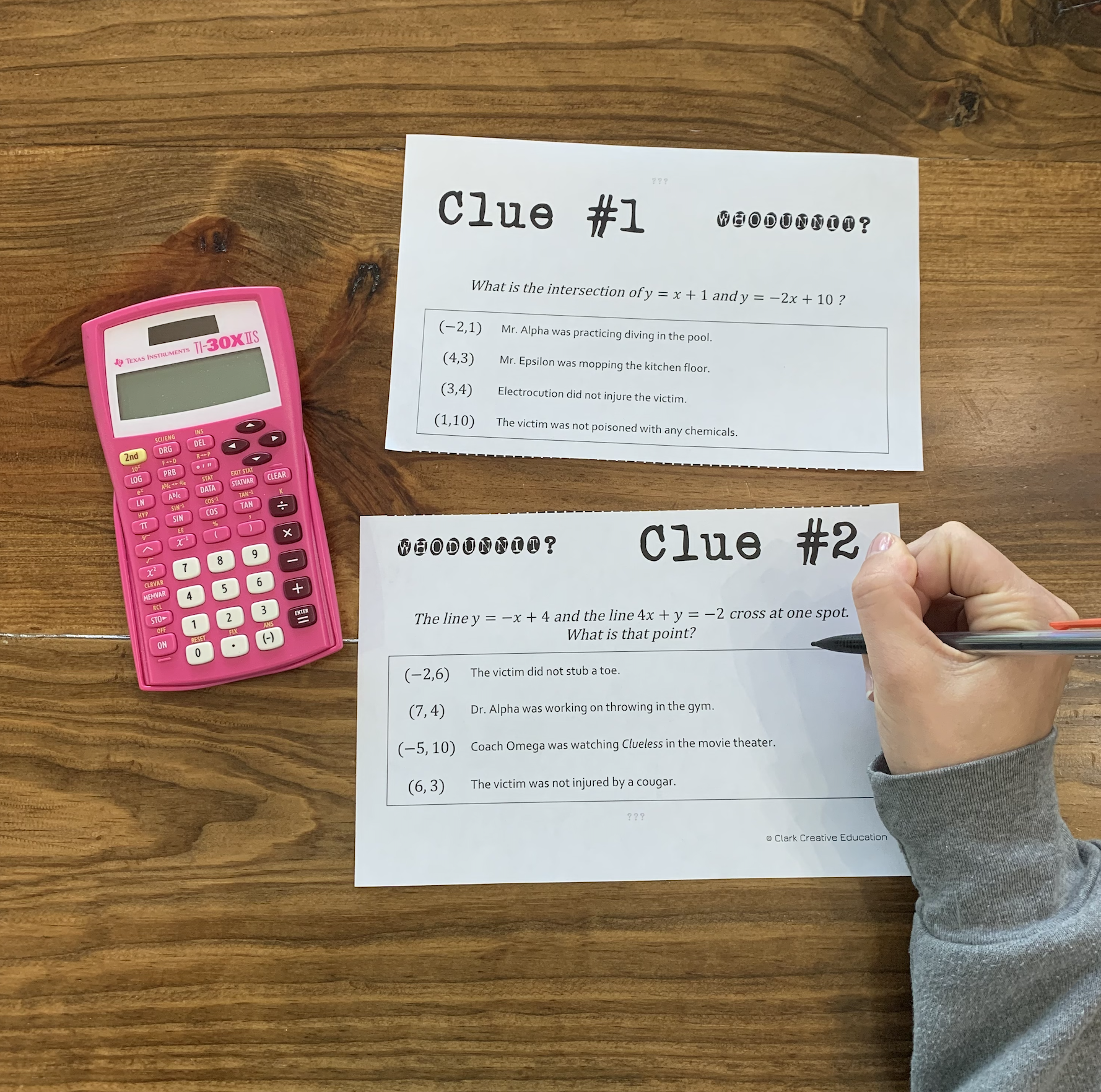
Mystery Math Activities (Whodunnits)
Mystery-style math activities are one of the most effective ways to keep students focused.
In Whodunnits, students solve math problems and use their answers to eliminate suspects, weapons, or locations. If their math is incorrect, the mystery won’t solve properly.
Students stay motivated because they want to solve the case — and the math becomes the pathway to doing so.
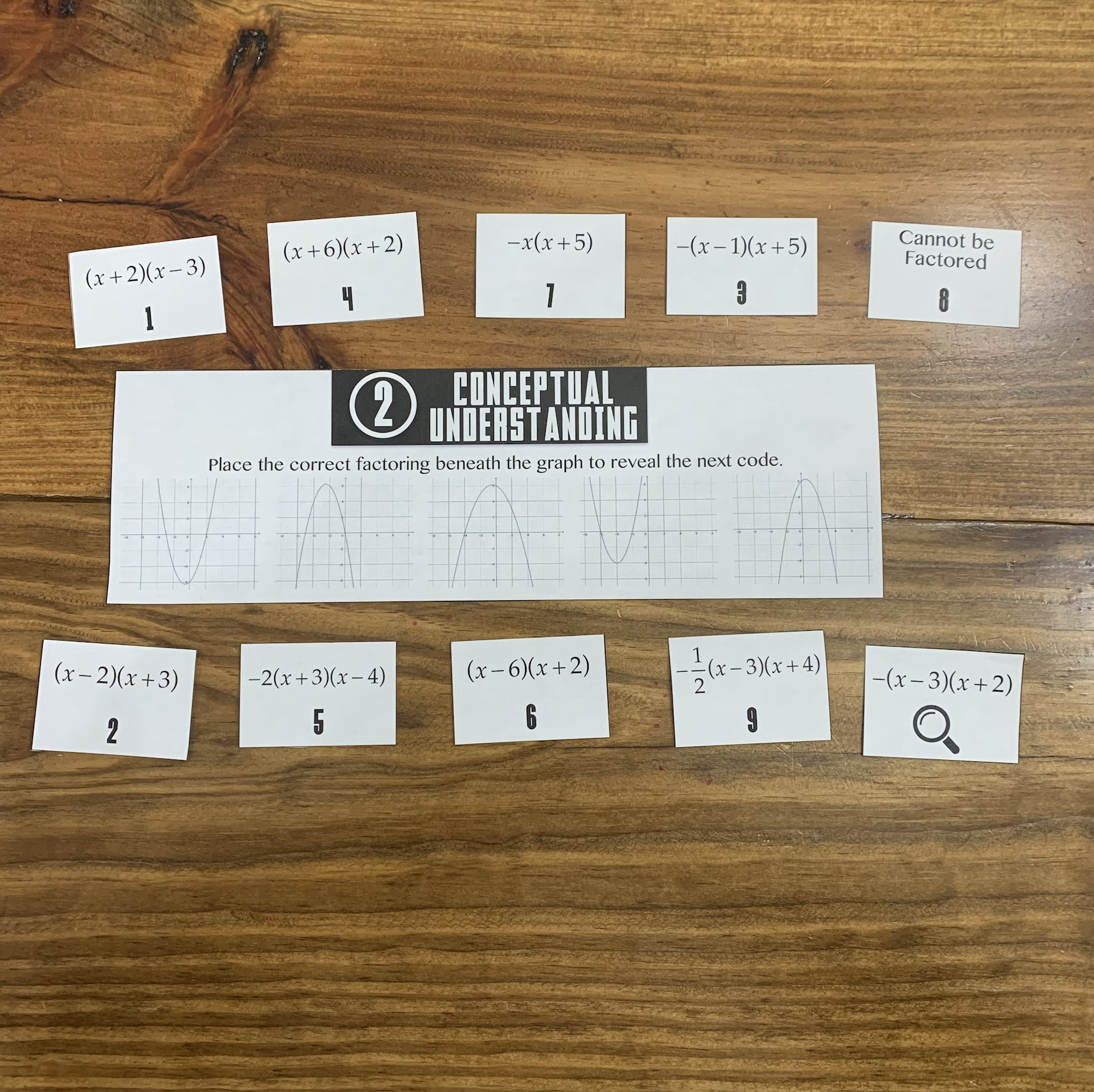
Collaborative Math Challenges (Escape Rooms)
Math Escape Rooms turn review into a team challenge.
Students work together to solve problems that unlock codes and progress through the activity.
Because each step depends on the previous answer, students naturally check each other’s work and discuss strategies.
These are especially effective before unit tests or state exams.
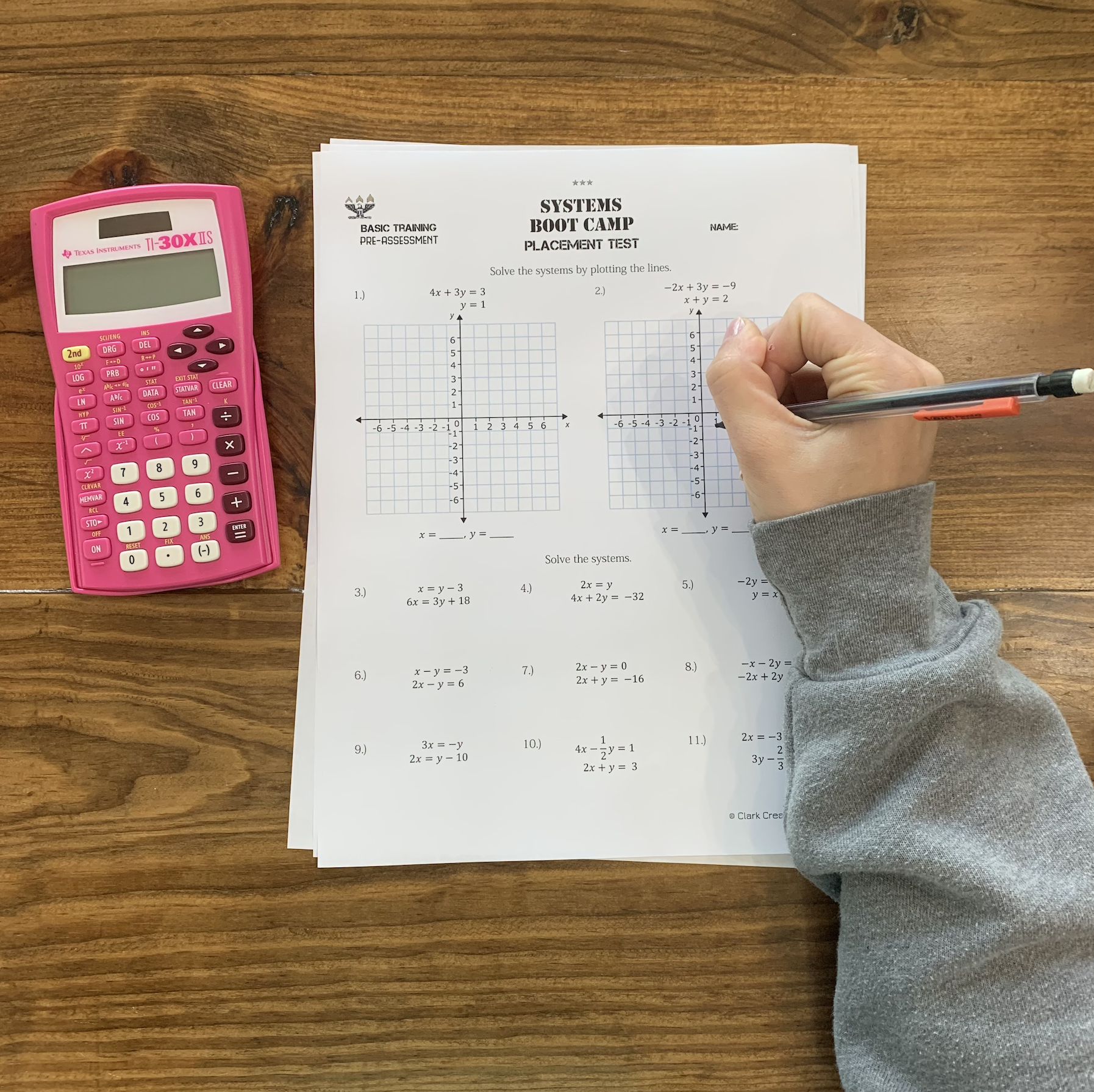
Skill Progression Activities (Boot Camps)
Boot Camps make math practice feel like a progression system.
Students move through scaffolded levels of difficulty, building confidence as they go. Each correct answer moves them closer to the next level.
Teachers appreciate that Boot Camps can be used as:
• skill practice
• intervention
• math stations
• spiral review
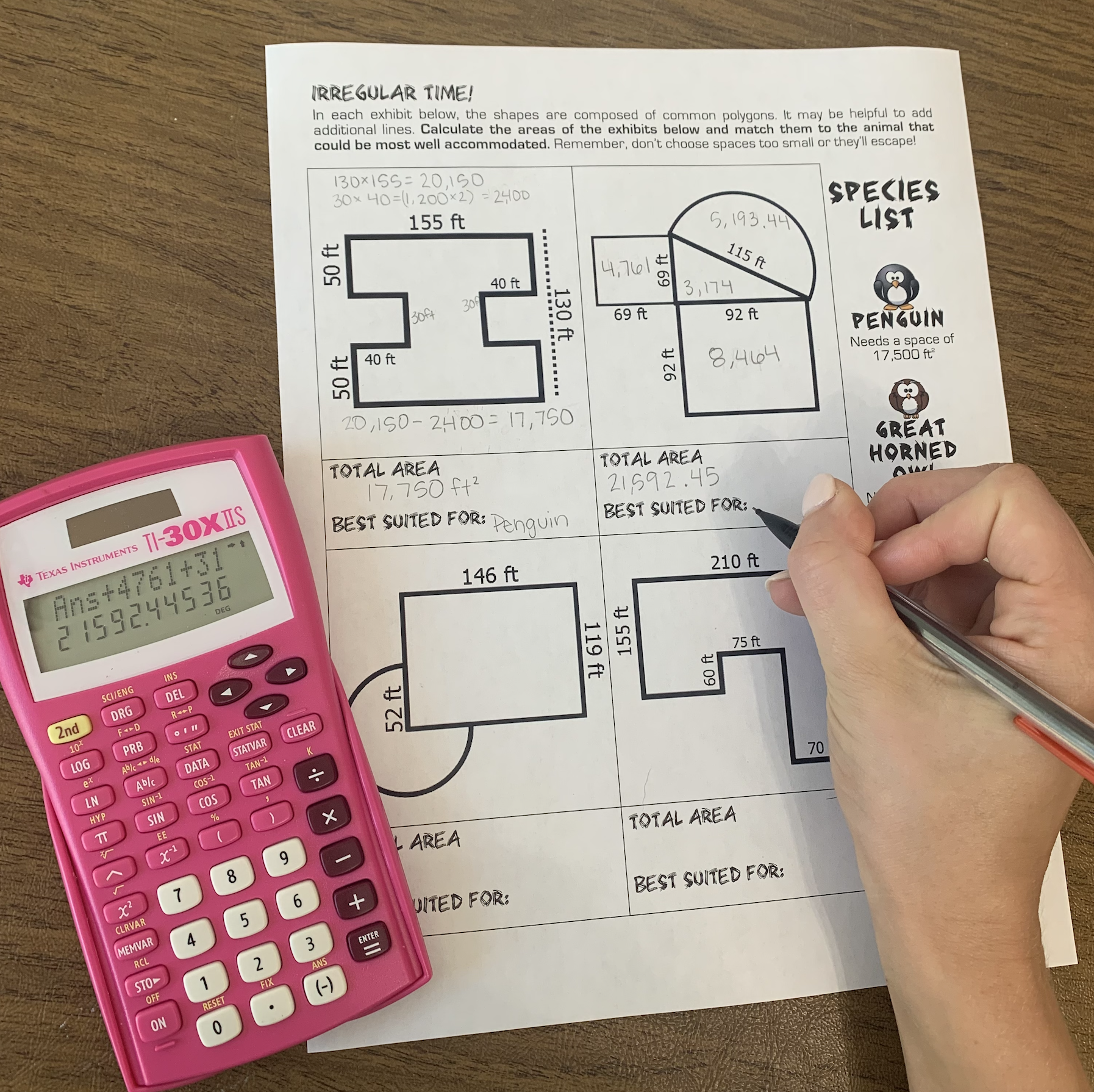
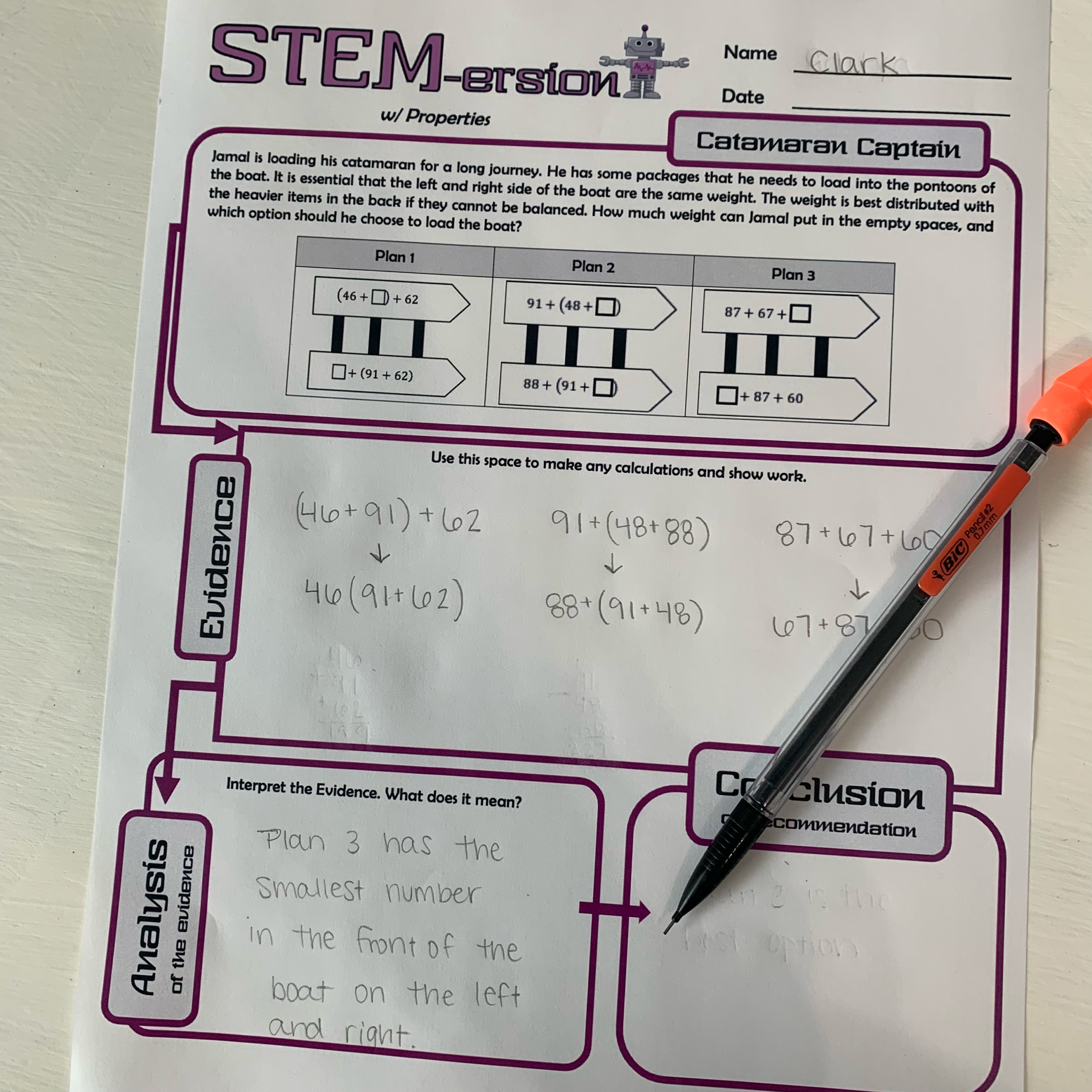
Real World Math Scenarios (STEMersions)
For teachers looking for fun math activities that also build deeper thinking, STEMersions connect math to real-world careers and decisions.
Students analyze multiple variables, apply mathematical reasoning, and defend their recommendations using evidence.
This format blends math with STEM exploration and problem solving.
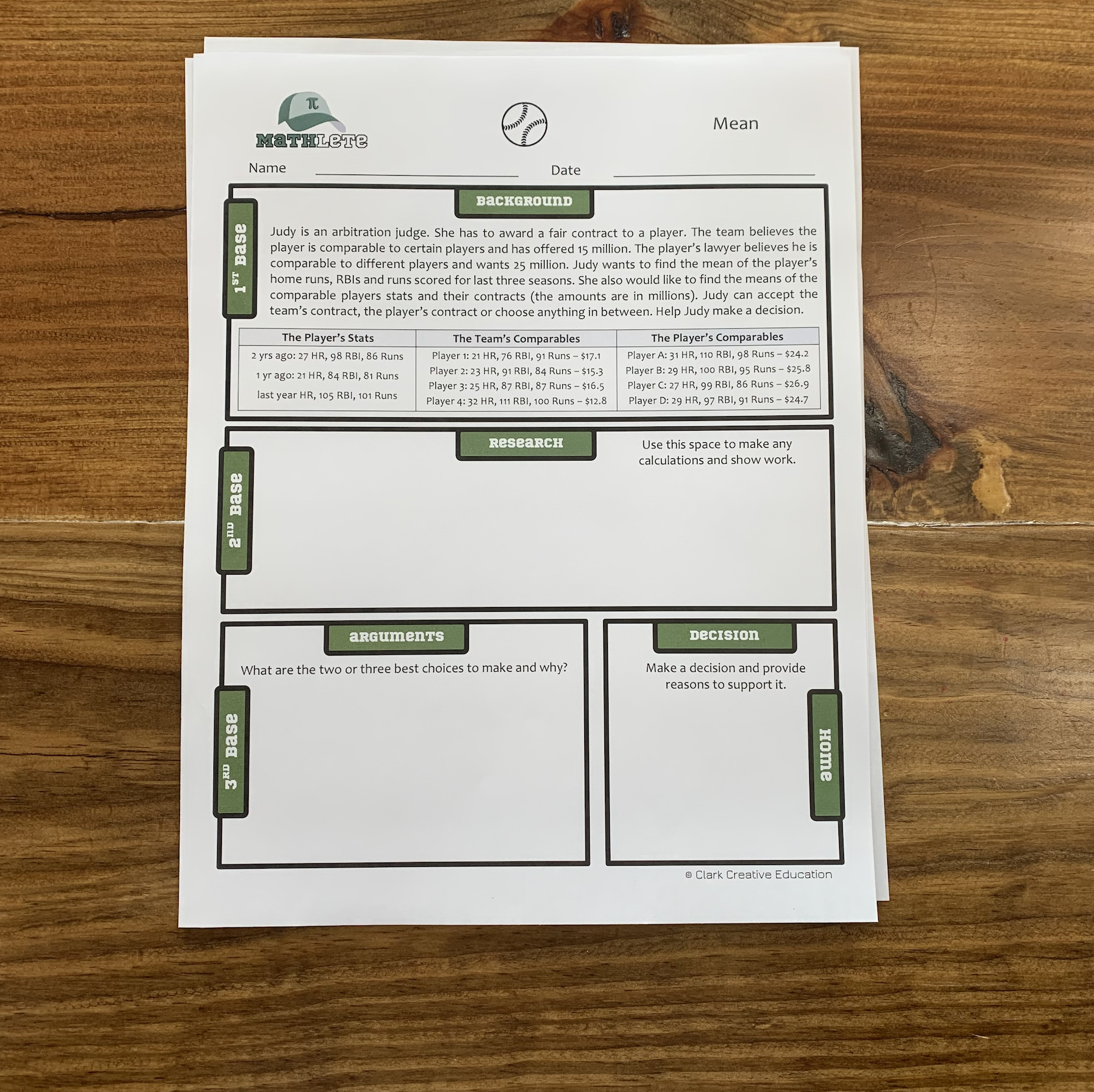
Competitive Math Challenges (Mathletes)
Mathletes introduce friendly competition into the math classroom.
Students analyze complex situations — often sports-related — and must justify their decisions using mathematics.
Rather than simply computing answers, students must explain their reasoning and defend their conclusions.
Creative Math Activities for Elementary School
Elementary math classrooms are where students develop the confidence and curiosity that shape their future relationship with mathematics.
Creative elementary math activities focus on:
• building foundational skills
• reinforcing number sense
• encouraging collaboration
• connecting math to real-life situations
Some of the most engaging formats include:
• Boot Camps for scaffolded skill practice
• Whodunnits for mystery-based math practice
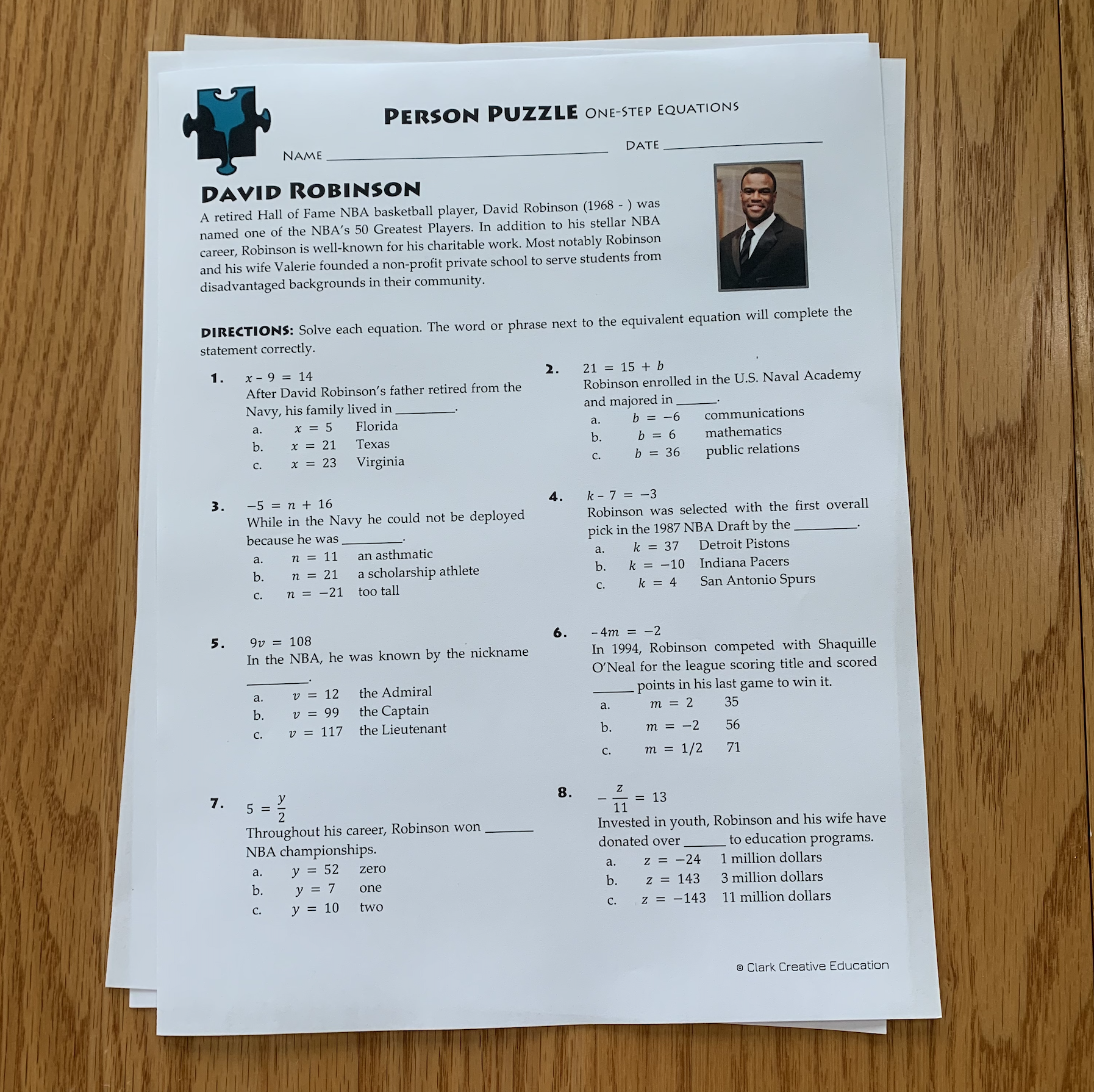
• Person Puzzles that reveal biographies as students solve problems
• Heroworks, where solving problems reveals a joke punchline
• Escape Rooms for collaborative review challenges
These activities make elementary math feel less like repetitive practice and more like exploration and discovery.
Read the full guide here:
Creative Elementary Math Activities That Engage Students
Creative Math Activities for Middle School
Middle school is a major transition point in math learning.
Students begin moving from arithmetic toward algebraic reasoning, proportional thinking, and deeper problem solving.
Creative middle school math activities help bridge that gap by making abstract ideas feel more tangible.
Effective formats include:
• Whodunnits that combine equations with mystery solving
• TableTops collaborative review games
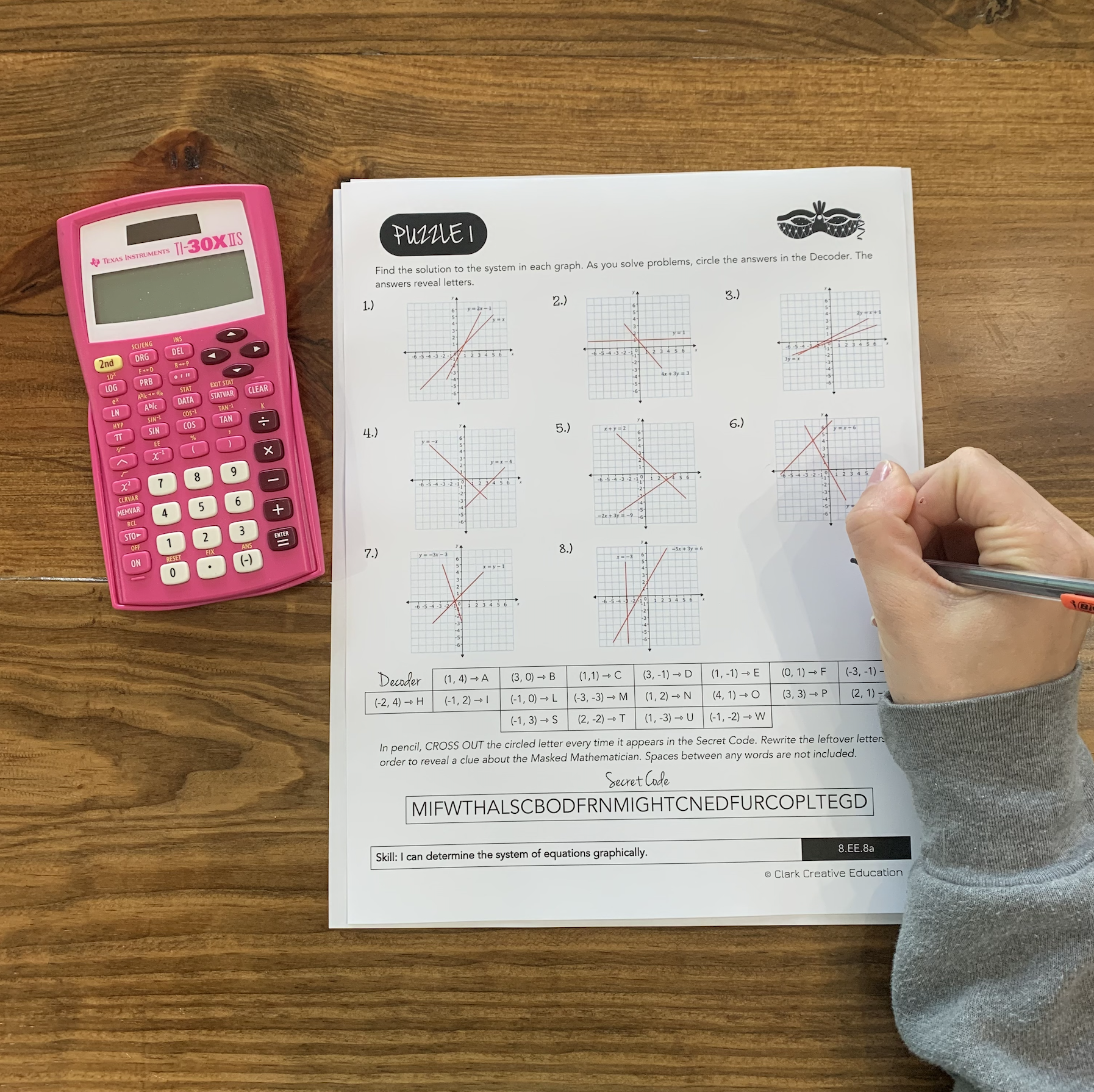
• Masked Mathematicians error analysis challenges
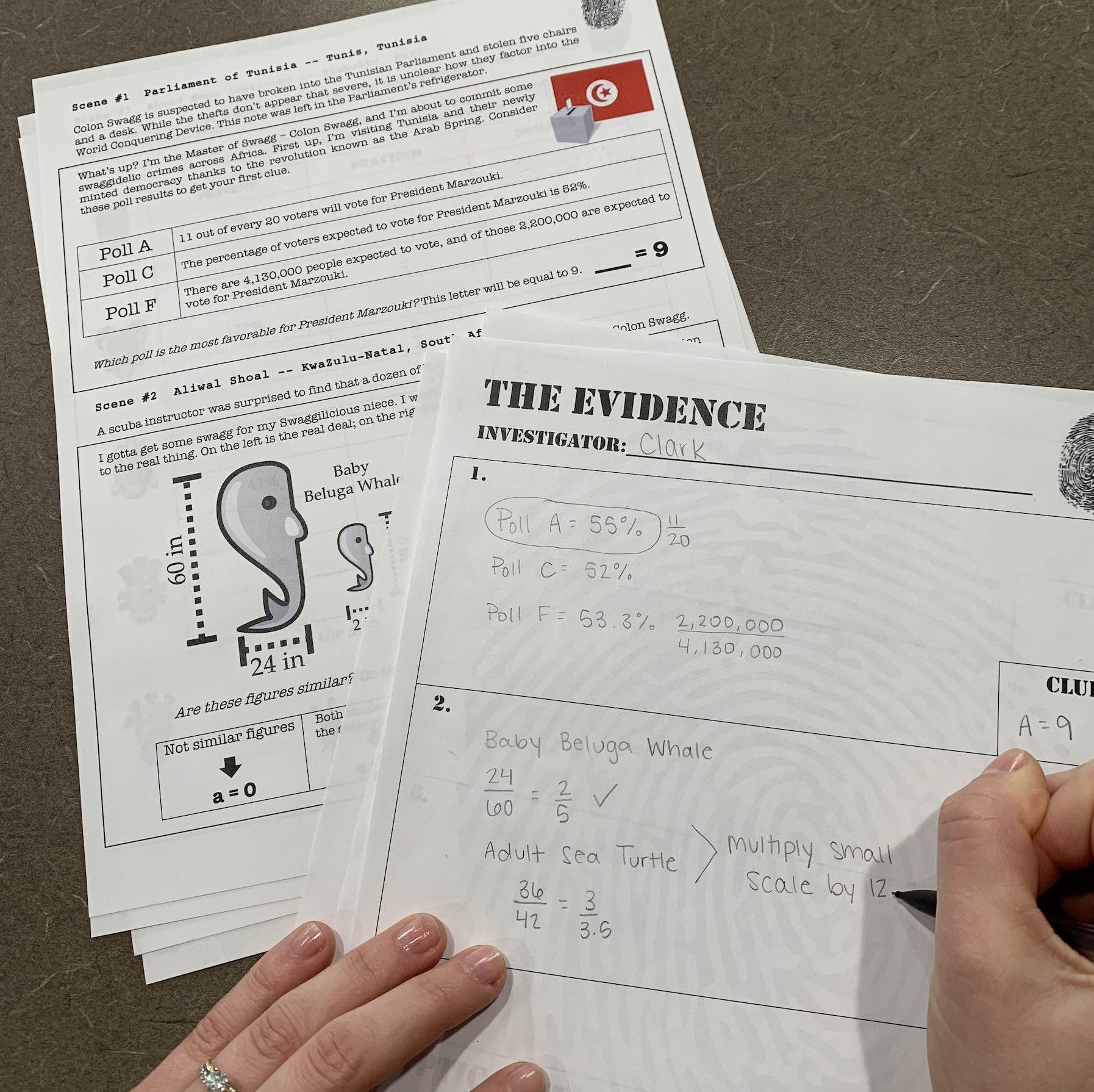
• CSI: Math investigative problem solving
• STEMersions real-world math scenarios
At this stage, students benefit from activities that challenge them to explain their thinking, not just calculate answers.
Explore the full list here:
Creative Middle School Math Activities That Engage Students
Creative Math Activities for High School
By high school, math becomes increasingly abstract.
Courses such as Algebra 1, Geometry, Algebra 2, and Precalculus require students to think conceptually and apply mathematics to complex situations.
Creative high school math activities help students see the purpose behind the mathematics they are learning.
Some of the most effective formats include:
• Escape Rooms for challenging collaborative review
• CSI: Math investigations that analyze evidence
• Mathletes competitions that require defending decisions
• STEMersions real-world modeling challenges
• 21st Century Math Projects focused on authentic applications
These experiences transform math from something students simply complete into something they actively use to solve problems.
Read the full guide here:
Creative High School Math Activities That Actually Engage Students
Bringing Creativity Into the Math Classroom
Creative math instruction doesn’t mean abandoning strong mathematical structure.
Instead, it combines:
• skill practice
• collaboration
• real-world context
• higher-order thinking
When these elements come together, students begin to see mathematics as something more than numbers on a page.
They begin to see it as a tool for solving real problems.
Explore Creative Math Activities by Grade Level
If you’re looking for ready-to-use classroom ideas, explore the full collections below:
Creative Elementary Math Activities That Engage Students
Creative Middle School Math Activities That Engage Students
Creative High School Math Activities That Actually Engage Students
Each guide includes classroom-tested activity formats designed to increase engagement while maintaining rigorous mathematical thinking.
Frequently Asked Questions About Creative Math Activities
What are creative math activities?
Creative math activities are learning experiences that combine collaboration, problem solving, and real-world application to make mathematics more engaging and meaningful for students.
Why are creative math activities important?
They increase student motivation, improve persistence with challenging problems, and help students connect mathematical concepts to real-life situations.
What are examples of creative math activities?
Examples include mystery-based math activities like Whodunnits, collaborative Escape Rooms, STEM career challenges like STEMersions, and real-world 21st Century Math Projects.