Tabletop Classroom Games: Game-Based Review Activities for Every Subject
Tabletop classroom games turn review into an interactive learning experience where students practice academic skills through board games, card games, and strategy-based challenges.
Instead of completing traditional worksheets or task cards, students use the same content in multiple game formats that make practice more collaborative, engaging, and memorable.
These classroom learning games bring the excitement of modern tabletop gaming into academic review while still keeping the focus on standards-based practice.
What are Tabletop Classroom Games?
Tabletop games are skill practice activities that can be played in multiple formats, including board games and card games.
Rather than using a single worksheet format, students answer academic questions while playing a game. The same set of review problems can power different styles of gameplay, giving teachers flexibility and giving students more than one way to interact with the material.
This format keeps the academic rigor of task cards and review sets while adding strategy, choice, discussion, and fun.
Multiple Game Formats, One Set of Questions
One of the biggest strengths of Tabletop classroom games is that the same academic content can be used across multiple game styles. Teachers can mix it up, rotate formats, or let students choose the way they want to play.
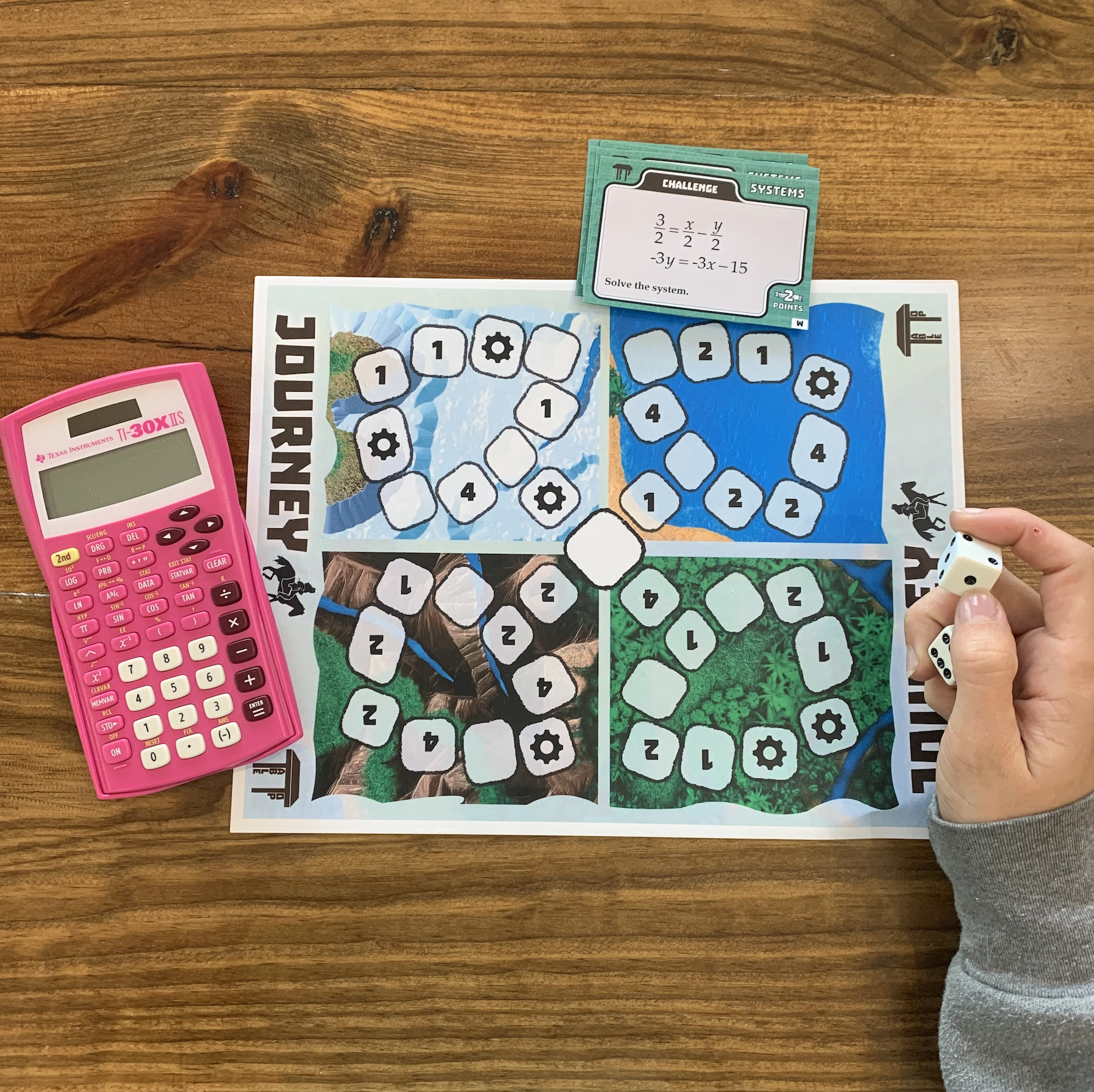
- Journey – a traditional board game format where students move around the board and try to accumulate points
- Conquer – a head-to-head strategy game where students attack, defend, and try to reach the opponent’s base
- Draft – a pick-and-pass card game where students choose problems strategically to score the most points
- Mystery – a secret mission card game where students score points while also trying to complete hidden objectives
Because each format plays differently, students can revisit the same skill practice without it feeling repetitive.
Why Tabletop Games Work in the Classroom
- Students stay engaged because they are playing a game
- The same review content can be reused in multiple formats
- Games encourage collaboration, discussion, and strategic thinking
- Practice feels more interactive than traditional worksheets or task cards
Tabletop games are especially powerful for review because they combine repetition with variety. Students still practice important skills, but the game mechanics make the experience feel fresh.
Tabletop Classroom Games by Subject
Our tabletop classroom games are available across multiple subjects so students can practice important academic skills while playing interactive review games. Each subject uses the same game-based concept, but the content is tailored to the discipline.
Explore Tabletop games in each subject area:
- Tabletop Math Games – Students practice math skills through board games, card games, and strategy-based review.
- Tabletop Science Games – Students answer science questions while playing interactive review games.
- Tabletop Social Studies Games – Students review history and social studies content through tabletop gameplay.
- Tabletop Language Arts Games – Students practice grammar and language skills through classroom learning games.
An Upgrade to Traditional Task Cards
Tabletop games keep the core strength of task cards—focused academic practice—but add game mechanics that build energy and interaction in the classroom.
Students are not just answering questions. They are making decisions, reacting to opponents, pursuing objectives, and staying engaged because the academic work is tied directly to the game.
That makes Tabletop a powerful option for teachers who want review to feel more like a classroom game and less like another worksheet.