Wiffleball: A Sports-Based Statistics & Probability Math Project
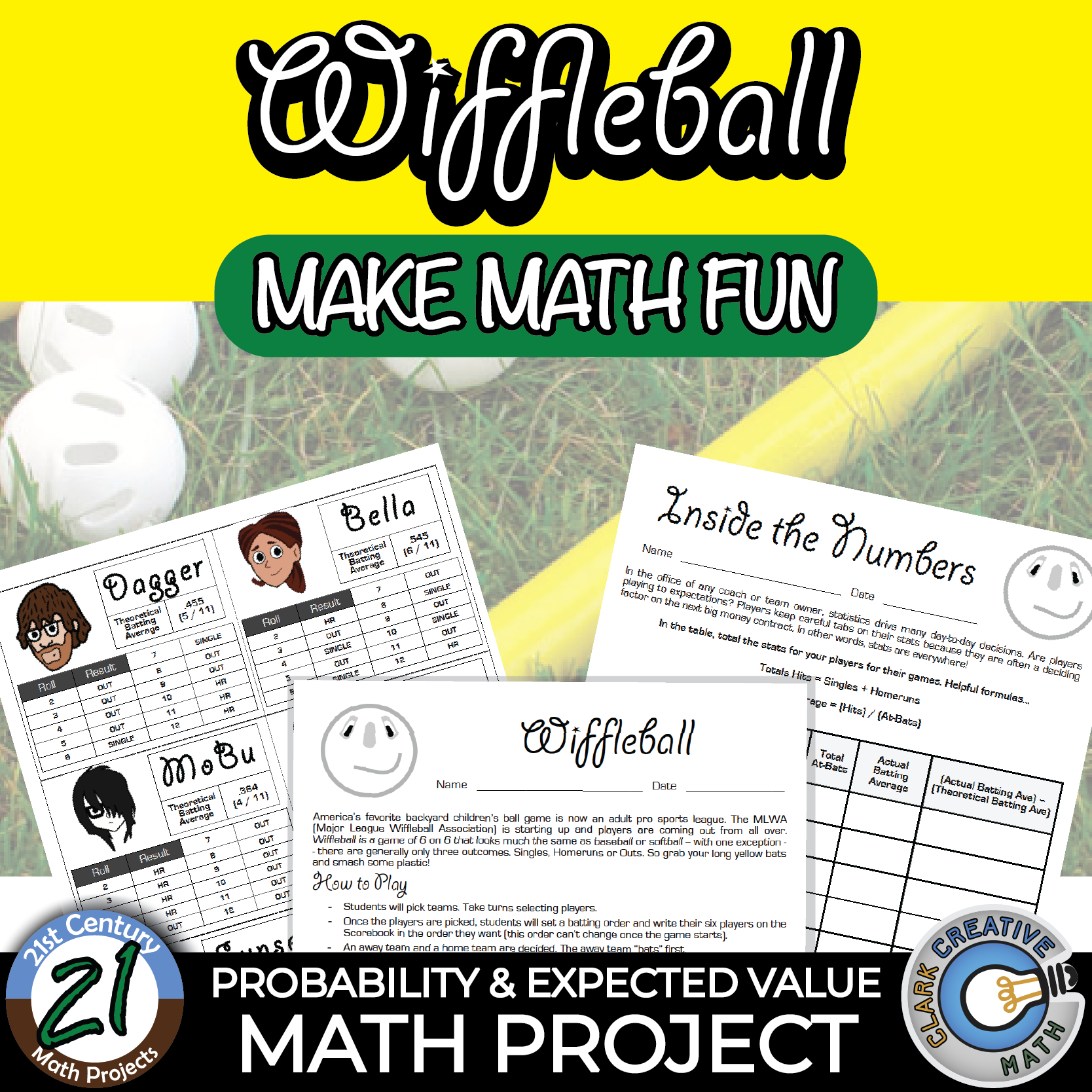
A Probability Project That Gets Students Off Coins and Spinners
Our Wiffleball sports-based statistics project gives probability a purpose. Instead of flipping coins or spinning spinners, students build teams, play games, track data, and compare what should have happened to what actually happened.
In our math project, students act as team managers, use player statistics to build a competitive team, keep score during gameplay, and analyze how experimental probability compares to theoretical expectations.
Suggested Grade Level: 6–12
Best for: Theoretical Probability, Experimental Probability, Statistics, Data Analysis
How This Wiffleball Sports Based Statistics Project Works
Students step into the role of team managers and use player statistics to build a roster capable of winning. Then the project moves from paper to action: students play Wiffleball games, track outcomes, and record results using a baseball-inspired scorebook.
After gameplay, students crunch the numbers to compare experimental results against theoretical expectations. If you choose, the project can even end with a tournament bracket and class champion.
What Students Do
- Analyze player statistics to build a team
- Play a series of Wiffleball games
- Keep track of results using a scorebook
- Compare theoretical and experimental probability
- Use data to evaluate whether players performed as expected
Skills Students Practice
- Theoretical versus experimental probability
- Collecting and organizing statistics
- Using data to support conclusions
- Interpreting performance trends
- Collaborative decision-making and gameplay strategy
Why This Probability Project Hooks Students
Probability becomes far more memorable when students can see it unfold in a game. Instead of abstract random events, students experience outcomes, record results, and then analyze whether the data matched their expectations.
That combination of gameplay, competition, and analysis helps statistics feel interactive rather than repetitive.
When to Use This Project
- During a probability or statistics unit
- As a hands-on performance task
- For collaborative group work and data analysis practice
- As an end-of-unit project before assessment
- Anytime students need a break from traditional probability models
More Real-World Math Projects
Teachers searching for creative math activities often want something that moves beyond worksheets while still reinforcing meaningful learning. Sports-based projects like this one help students collect real data, analyze outcomes, and defend their reasoning.
Looking for more real-world math experiences? Browse our full collection of 21st Century Math Projects designed to make students think, collaborate, and apply math like it matters.